


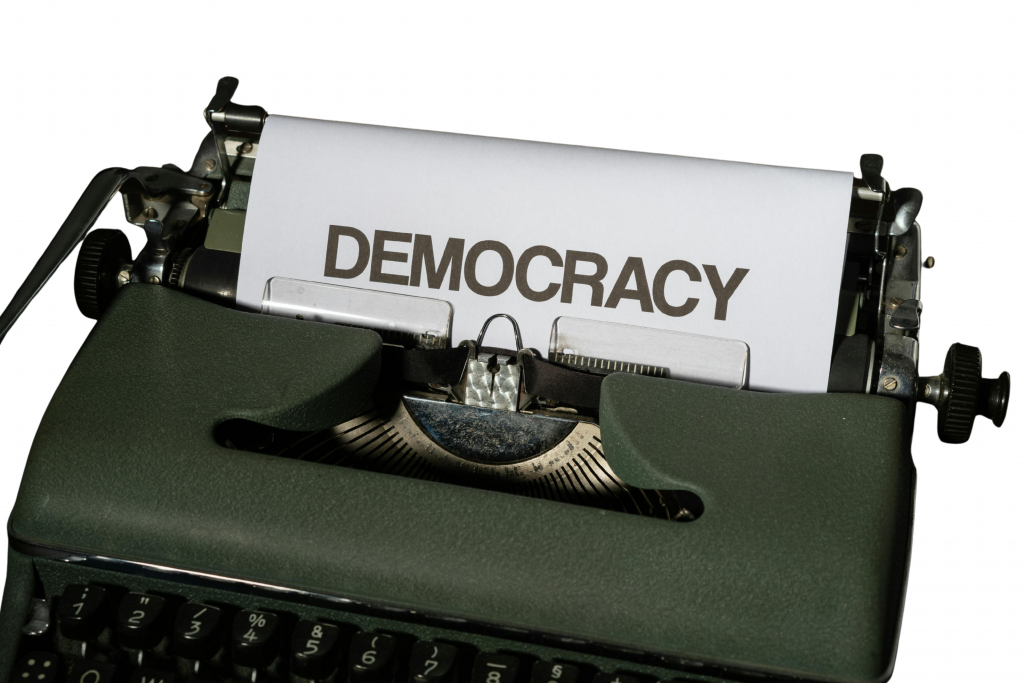
After the financial crisis of 2008, Iceland launched an attempt to rewrite its constitution through a citizens-led participatory process.This project, widely praised internationally as the first “crowdsourced constitution”, involved ordinary citizens in drafting proposals for political reform. However, despite popular support, the initiative has been going on for nearly two decades between popular endorsement and political paralysis.
The banking collapse
In 2008, the economic crisis had some strong consequences for Iceland. Iceland’s three major banks collapsed, taking the national currency and economy down with them. The State couldn’t rescue them because the banks had expanded extremely quickly and were too exposed to survive the financial crisis. Consequently, as they went bankrupt one after another, the state took control of them, while the country’s currency and economy collapsed.
The economic crash became a political one. In early 2009, thousands of Icelanders went to the streets in the so-called “Pots and Pans Revolution,” asking for accountability and forcing the resignation of the government. Trust in politicians collapsed. There was a demand for a new social contract.
A temporary constitution
Constitutional reform after the 2008 crisis became a new urgency for citizens. Iceland’s existing constitution was, as Prof. Jón Ólafsson, School of Humanities, Icelandic and Comparative Cultural Studies, during the webinar Constitutional reform in Iceland between crowd-sourcing and stagnation, noted that the current constitution is closely related to the former Danish constitution. It was a provisional constitution created in a rush in 1944 when Iceland founded its republic during the German occupation of Denmark in World War II. It never should have been permanent, it was meant to be temporary. Writing a truly Icelandic constitution represented not just legal modernisation, but also the republic’s final step to full independence.
The drafting process
In 2009, the post-crash government of Prime Minister Jóhanna Sigurðardóttir committed to a redrafting process, appointing a Constitutional Committee of seven people to organise a National Forum. Around 950 randomly selected citizens participated, identifying core values to guide the drafting.
Elections were held in 2010 for a 25-member Constitutional Assembly, selected from ordinary citizens rather than politicians. Later, the Supreme Court invalidated the results on technical grounds, but Parliament reappointed the same 25 individuals as a Constitutional Council. The Council decided not to revise the old constitution, but to write an entirely new one.
The revolutionary part about this drafting process was in its transparency. Council transmitted all its proceedings online and used social media to publish drafts and engage with public comments. This led to the label of “crowdsourced constitution”.
The final draft was completed in July 2011, and introduced new rights such as environmental protections, rights of future generations and a provision declaring natural resources national property; a step in institutionalising rights of nature. In a consultative referendum of 2012, more than two-thirds of voters expressed support for it as the basis for a new Constitution.
Stagnation
As 2013 elections approached it was clear that the popular mandate was not strong enough, the parliamentary opposition grew because of powerful interest groups especially those tied to the fishing quota system, a small number of “quota barons” controlled concentrated resource wealth. The bill was quietly shelved without a parliamentary vote.
Subsequent governments remained either indifferent or preoccupied with minor amendments. A 2019 deliberative poll produced results that were different from the 201 Council’s on some points but faced opposition from activists who deemed any deviation from the original bill a betrayal of the people’s will. This approach, defending an imperfect text rather than looking for a workable solution, further complicated the disagreement.
Structural barrier to reform
Jón Ólafsson identified several structural reasons for the stagnation. Constitutionally, any amendment requires approval by two consecutive parliaments, giving institutional actors a powerful veto. The Supreme Court’s invalidation of the original election had already weakened its democratic legitimacy. Moreover, political parties simply saw no electoral incentive to push the reform through.
Another deeper problem is the fishing quota system. The attempt to translate a politically charged principle into constitutional language devolved into unresolvable semantic debate. These disputes were around whether exploitation licences should demand “full” “fair” “normal” or “reasonable” payment. This is an example of what Ólafsson argues is the limitation of activist-led deliberation, because without sufficient legal expertise, participatory processes can generate popular support but without the needed instruments to produce durable law.
The EU membership question
The current government plans to propose amendments before 2028. But Ólafsson is sceptical about this. The dominant political strategy is simply to wait for the movement to exhaust itself.
Iceland applied for EU membership in 2009, but negotiations were suspended in 2013. In 2026, the government announced a referendum for the 29th of August on whether to resume accession negotiations, on whether talks should restart. If the referendum results in resuming accession negotiation, there will be some obstacles due to the current Constitution, particularly its provisions on sovereignty and natural resources. The fishing quota issue poses obstacles to EU accession, highlighting the need for a reform.
Conclusion: the gap between popular will and enforceable law
Iceland’s constitutional experiment highlights the importance of citizen participation in lawmaking. However, it also reveals the challenges of translating citizen engagement into enforceable law, emphasising the need for a strong institutional bridge and political will.
Citizens can engage seriously with questions of constitutional design. What remains harder and necessary is building the institutional system that allows citizens ‘ engagement to be transformed into a law. Iceland has shown the world how to start. Now it has to show how to finish the job.
CTOE will closely follow the outcome of Iceland’s August 2026 referendum and its consequences for the constitutional project and will provide updates as this long-unfinished democratic story continues to unfold.