



As governments worldwide are gradually implementing Artificial Intelligence-powered tools to redesign how citizens engage in democratic life, some critical questions arise. Will this technological transformation empower all voices equally, or it will deepen the inequalities that already exist and which it promises to solve?
AI at the Crossroads of Civic Life
Artificial intelligence (AI) is reshaping the panorama of civic engagement, influencing how citizens interact with public institutions, how they can access information and even how they can participate in democratic processes. Governments and organisations are integrating AI tools into governance. This technology brings both transformative opportunities and important threats. Understanding this dual role of AI that has the ability to improve civic participation and its potential to reinforce existing structural inequalities, for this reason is crucial to analyse and evaluate its presence in civic space.
Pros of AI in civic engagement
One of the key reasons AI can be relevant to civic engagement lies in its capacity to improve efficiency and accessibility. AI-powered systems can be used to simplify bureaucratic processes or reduce administrative delays and even speed up communication between citizens and public authorities. As highlighted in academic research on citizen-centric governance, these AI tools have potential to reinforce public trust by making services more responsive and especially more transparent (Pislaru et al., 2024). For example, chatbots or automated platforms can handle repetitive inquiries, allowing institutions to give a response to citizens in a quicker and more effective way. For instance, in Belgium, some cities use integrated AI chatbots to guide users through the exact required documents, fee structures and fast-track booking procedures for their eID (electronic identity card).
In particular, Natural Language Processing (NLP) has a critical role in extending participation. NLP enables interaction in multiple languages and simplifies complex administrative language. NLP tools have the potential to make civic processes more inclusive, especially for those individuals that have limited literacy or have obstacles because of language barriers. This is supported by findings from studies on AI and civic engagement, which emphasise technology’s potential to overcome barriers or lower them to participation and foster more inclusive democratic processes (Sarafis et al., 2025).
Guarding the Vote?
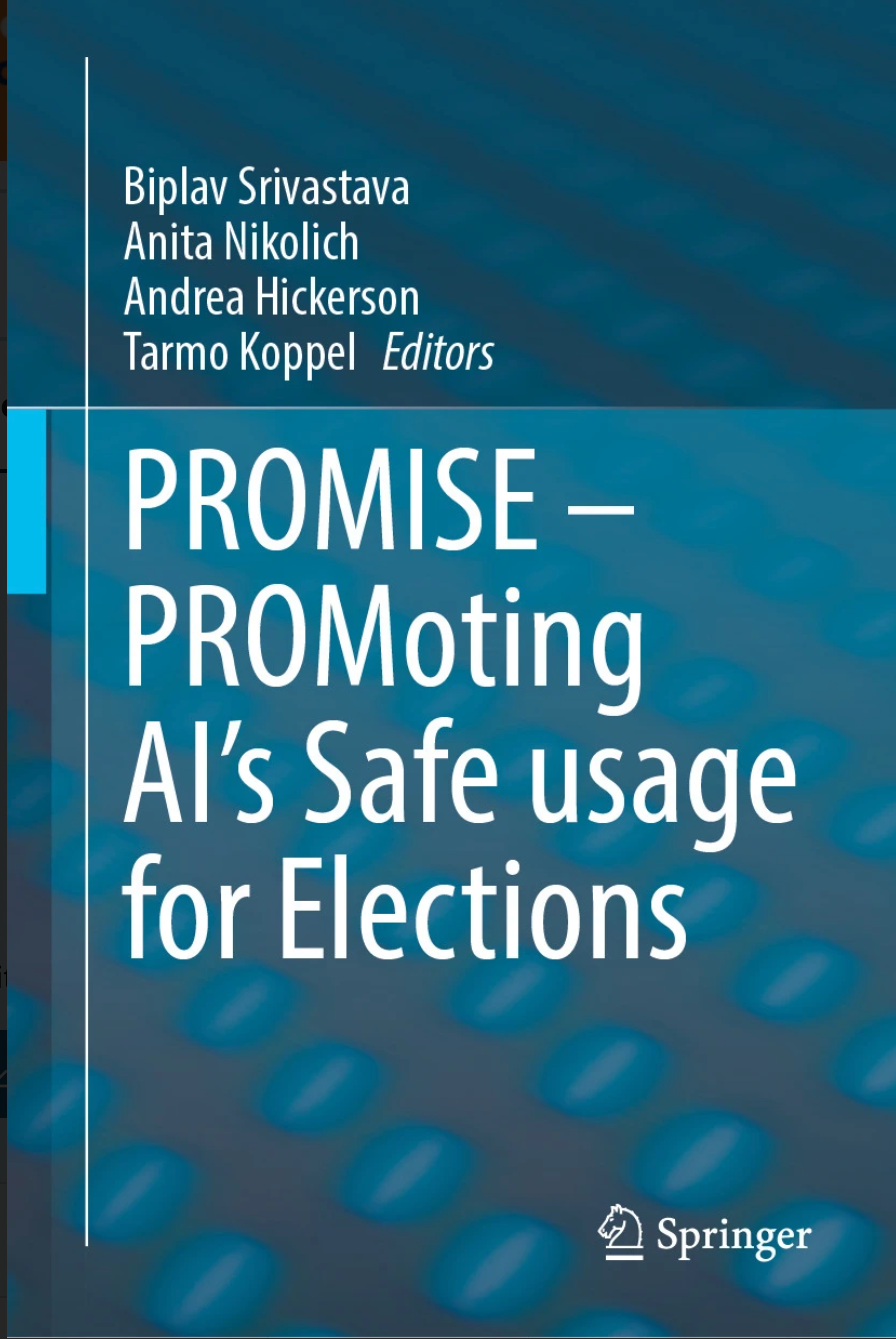
AI also offers analytical means that can improve democratic oversight. It means that machine learning models can identify voting patterns, audit electoral processes and detect irregularities in poll staffing or voter behaviour. Moreover, AI systems can monitor social media platforms and identify potential indicators of voter suppression or even misinformation campaigns. Such applications of Artificial Intelligence are discussed in works like The Power of AI to Strengthen Civic Engagement (Smith, 2025), which suggest that AI can serve as a tool for safeguarding electoral integrity and even improving accountability. (Smith, 2025)
However, these benefits are accompanied by concerns. A central issue is the concentration of AI development and control in the hands of a small number of big tech companies. This concentration of power raises critical reflections about who is accountable about transparency and about democratic oversight. Without proper regulation or even diversification, the decisions made by these small groups of actors can have far-reaching consequences for the wider public and shape civic participation in ways that are invisible and contestable.
Another concern is the potential for AI to intensify surveillance. While monitoring tools can be used to detect harmful activities such as voter suppression, they can also be used to track and overcontrol populations. Especially those already subject to increased scrutiny. An example is Greece, AI-powered surveillance systems have been used at border zones to monitor and profile migrants and asylum seekers, raising serious concerns of automated discrimination.
This creates a paradox in which the same technologies that can be used to enhance civic engagement may simultaneously weaken civil rights and worsen systemic discrimination.
AI can make Inequalities worse
AI systems are mostly built by a small group of people, this brings with it a lack of diversity in race, gender or geography. This matters because the people that are creating these AI systems all come from similar backgrounds and also the data that they use to train AI systems, it reflects existing social biases and lack of diversity. The result of it can be a technology that reinforces biases that already are present in our society.
We are already seeing this in practice. AI making unfair decisions in public service, some marginalised groups having less access to digital tools and existing social hierarchies being stronger than challenged.
Without deliberate efforts to improve accessibility to these tools and inclusivity, AI systems risk intensifying the digital divide. Individuals with limited access to technology or in lack of digital knowledge are going to be excluded from AI-enhanced civic processes. Therefore, rather than mitigating inequalities, AI is entrenching them if Artificial Intelligence is not carefully regulated.
Toward a Fair and Accountable AI in Civic Life
AI holds strong promise for enhancing civic engagement by improving efficiency and accessibility. But at the same time, its deployment raises challenges related to power concentration in a small group, systemic bias, and surveillance of people. The future of AI in civic life will depend not just on technological innovation but especially on the implementation of strong regulatory frameworks and inclusive design practices. Ensuring that AI will serve the public good requires a careful balance between harnessing its capabilities and dealing with its risks.
As Julia Piwowarska from Alliance4Europe notes:
“AI is a black box. We don’t ever really know the algorithms that dictate the output of AI tools, or how global powers and tech firms are involved in the AI race and use the data the users generate. On the other hand, democracy relies on hands-on engagement of citizens, fairness and transparency to function well. While using AI for civic engagement, we should remain firmly in the driver’s seat, and not let the vehicle take over.”
Artificial Intelligence will be as democratic as we choose to make it. The responsibility lies not in the technology, but in those who create it, who can regulate it and those who use it. As Citizens Take Over Europe, we believe that technology must be implemented but only alongside a clear awareness of its risks and a strong commitment to using it responsibly. Effective regulation combined with public awareness of AI’s risks and benefits of AI, is essential to protecting our democratic values.
Sources:
Pislaru, M., Vlad, C. S., Ivascu, L., & Mircea, I. I. (2024). Citizen-Centric Governance: Enhancing Citizen Engagement through Artificial Intelligence Tools. Sustainability, 16(7), 2686. https://doi.org/10.3390/su16072686
Sarafis,D. K. Karamitsios and K. Kravari, “AI and Civic Engagement: A Brief Exploration of Applications and Opportunities,” 2025 International Conference on Advancement in Data Science, E-learning and Information System (ICADEIS), Bandung, Indonesia, 2025, pp. 1-6, doi: 10.1109/ICADEIS65852.2025.10933183.
Smith, M. (2025). The Power of AI to Strengthen Civic Engagement. PROMISE – PROMoting AI’s Safe Usage for Elections, 211–221. https://doi.org/10.1007/978-3-031-89853-2_14